SplinterFaction Real-time strategy
Free & open-source real-time strategy · Built on the Recoil engine

Two philosophies. One war.

SplinterFaction is a free, open-source real-time strategy game built on the Recoil engine. Command the Federation of Kala or the Loz Alliance in a war where damage is permanent, there is no radar, and the map is the economy.

Status  Playable now · Available on itch.io · Steam planned Platforms  Windows · Linux Modes  Skirmish · Survival · Multiplayer
2 Factions, locked in a bitter struggle.
200+ Maps, downloadable in-launcher
3 Resources: metal, energy, research
0 Repairs. Damage is permanent.
The game

Chess with a clock that never stops

Produce, build, expand, fight — and the map control funds the next cycle. Everything else is decoration. SplinterFaction strips the genre back to that loop and then changes the rules underneath it.

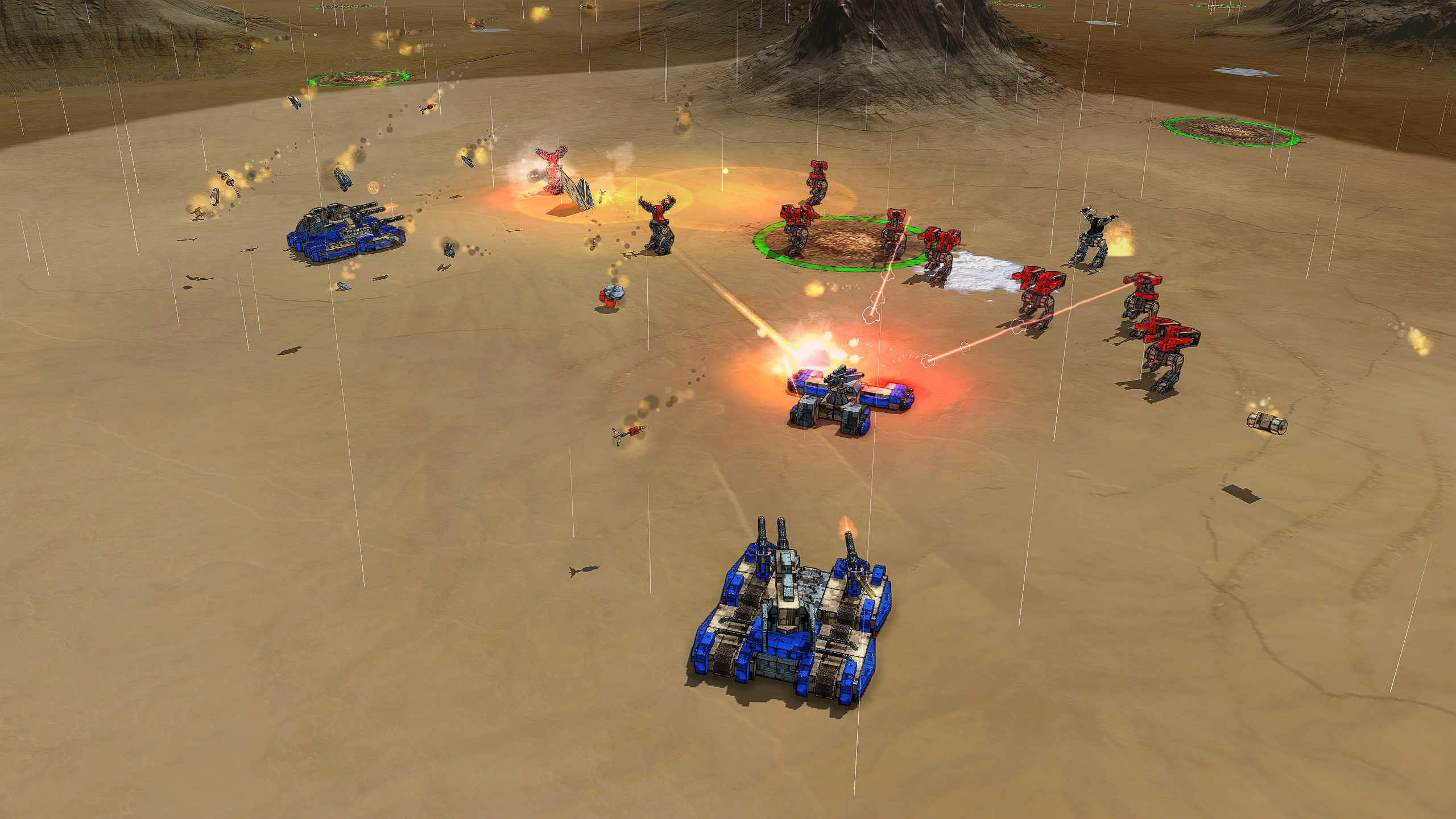
Placeholder: a Loz line with shield bars up, facing a Fed skirmish force Fed vs. Loz · in-development capture

For the Federation, Damage is a loan. For the Alliance, Damage is a bill.

Nobody repairs anything. Federation hulls regenerate and their healstations restore what a fight took, so a grinding engagement costs them time rather than army. Loz shields recharge fast — but once a shield collapses, every point of hull damage underneath is gone for the rest of the match.

Loz must make every engagement count. Fed can afford to be wrong, and then come back. Neither faction wants the fight the other one wants.

Read the faction dossiers

Placeholder: the same area shown twice — a seismic contact on the minimap vs. what is actually there once scouted Seismic contact vs. what was actually there

There is no radar

Seismic sensors tell you that something is moving, somewhere. Not what. Not how many. A still army pings nothing. A cloaked Federation army pings nothing even while it moves.

Scouting isn't a supplement to your radar picture here. Scouting is the picture. If you aren't sending units out to look, you are playing blind, and you'll find out when something arrives.

How the systems work

Choose a side

Two reflections of the same world

Both born from the ashes of Iammas. One ruled by vengeance, the other by conviction. Two genuinely different armies — not two colours of the same one.

Placeholder: Federation of Kala key art

Federation of Kala

Speed · Stealth · Sustainability

  • Fast walkers with self-repairing hulls
  • True cloaking — invisible to eyes and sensors
  • Disruption weapons that blind, silence, then immobilise
  • Fragile if caught. Never allowed to be careless.

Fed arrive first, leave first, and choose whether a fight happens at all. Recommended for your first game.

Full dossier
Placeholder: Loz Alliance key art

Loz Alliance

Mass · Protection · Inevitability

  • Slow heavy tanks behind personal energy shields
  • Projected shields at every scale, and they stack
  • Heat rays that cook a target toward detonation
  • Cannot run, cannot chase. Every fight is a commitment.

Loz don't raid. They arrive. A Loz line that gets into position and stays there is very hard to move.

Full dossier

Every unit, both rosters

Design rules

The things we took out

Some of the clearest decisions in SplinterFaction are subtractive. If you've played other games in the Recoil family, these are the adjustments.

No repair

Constructors build and reclaim. They do not fix. A tank that leaves a fight at 40% stays at 40%. Every engagement has a lasting cost, and trading efficiently is everything.

No build assist

One structure, one builder. Factories cannot be assisted. Your production capacity is your number of factories, not your number of constructors.

No radar

Seismic sensors detect movement and nothing else. A stationary army is a hidden army. Quiet is never safe.

No counter web

Damage is damage. No armour classes, no hidden multipliers. What decides fights is numbers, positioning, range and tech — plus two specialist effects you can actually see: heat and disruption.

Free cloak, free shields

Neither faction's signature system costs energy. Cloak everything. Shield everything. Your power budget is for converters and construction.

Nothing chain-explodes

Pack your power plants however you like. One lucky shot will never cascade through a base you spent ten minutes building.

All the systems, explained

Media

From the field

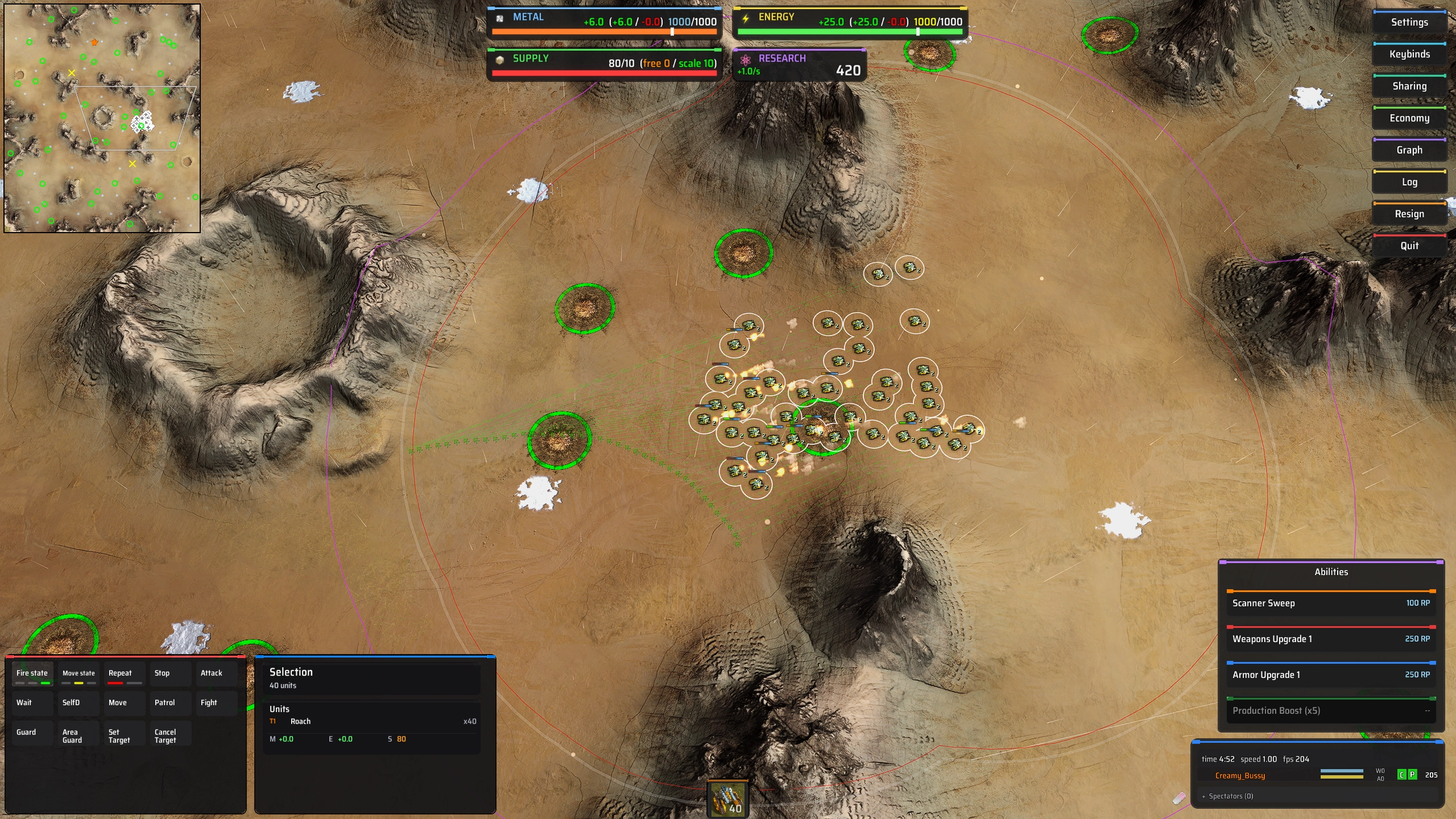
Placeholder: the Static GUI in a live game
Placeholder: an army spread along a drag-line concave
Placeholder: a Silverback under a Large Shield Generator

Screenshots & video

Where we are

Playable today. Growing every build.


  • Available on itch.io

    Now

    Download Coilbox pre-configured for SplinterFaction. It fetches the game and the maps for you and keeps them current. Nothing to set up.

  • Skirmish, Survival and multiplayer

    Now

    SimpleAI for a conventional match, SurvivalAI for co-operative wave defence against a beacon network, and official SPADS autohosts for online play.

  • The Field Manual

    Living document

    A complete commander's handbook: economy, construction, combat, both factions and every unit. Written for people who have never played an RTS.

  • Steam release

    Planned

    Not yet available. We'll say a date when we believe one.

Placeholder: the start-position placement screen, resource locations and a geothermal vent visible Start placement · the first real decision of a match
Dev log

Latest dispatches

All dispatches
Free and open source

Nobody is good at this immediately

The first ten games are supposed to be a mess. Somewhere around game fifteen, the loop clicks — you stop thinking about the interface and start thinking about the map. That's the game. Welcome to it.